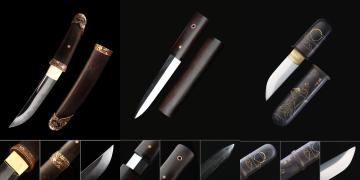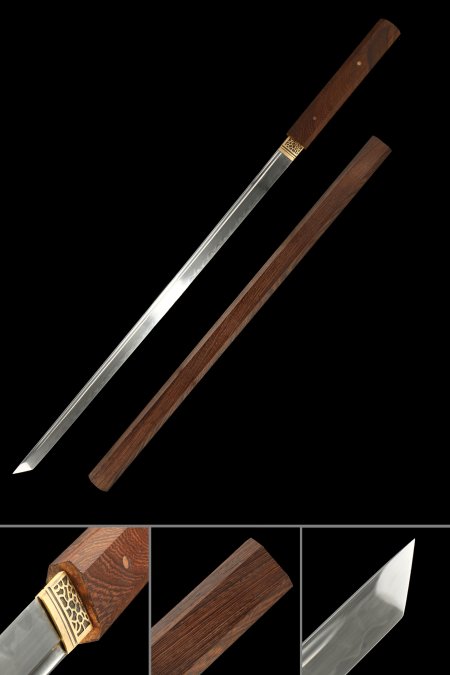
Brown Saya Ninjato
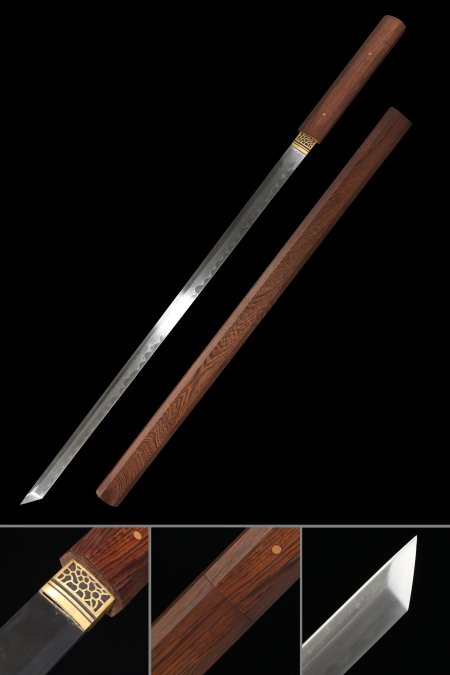
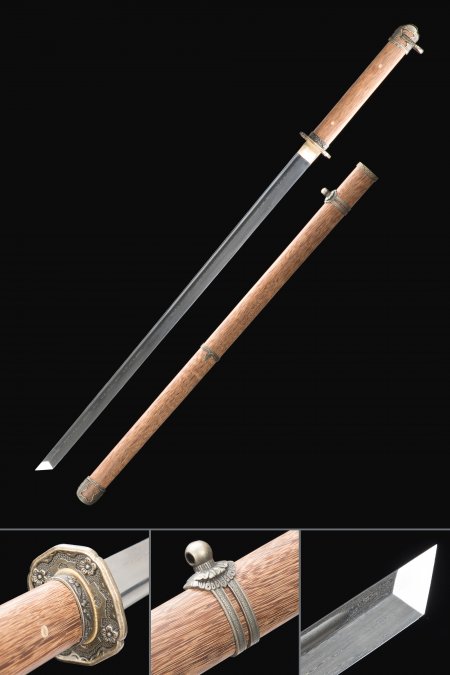
A brown saya ninjato brings together the straight-bladed silhouette of classical ninjato design and the warm, earthy elegance of a hand-finished scabbard - a pairing that reads as compelling on a display stand as it does in a dedicated collector's cabinet. Each piece in this collection is fully hand-forged from quality steel, fitted with genuine fittings, and assembled with the kind of measured craftsmanship that serious collectors recognize at a glance. Free standard shipping is included, and we stand behind every order with a straightforward return policy.

Free Shipping
219.00 USD

Free Shipping
209.00 USD

Free Shipping
189.00 USD

Free Shipping
259.00 USD

Free Shipping
189.00 USD
ON SALE! 15% OFF
Was: 219.00 USD

Free Shipping
279.00 USD
Related Collections
Frequently Asked Questions
What makes a ninjato different from a katana?
The most immediately visible difference is blade geometry. A katana features a pronounced curve along its length - a product of differential hardening that causes the spine and edge to cool at different rates. A ninjato, by contrast, carries a straight or very slightly curved blade, shorter overall, with a square or compact tsuba rather than the rounded guard typical of katana mountings. This straight profile gives the ninjato a distinctly angular silhouette that stands apart on a display wall. From a collector's perspective, the ninjato also tends toward more restrained proportions, making it an excellent display piece in spaces where a full-length katana would feel oversized. The straight blade also allows certain steel grain patterns - particularly Damascus fold lines - to read more cleanly across the entire surface without the visual interruption of curvature.
Why do collectors prefer brown saya over black or red?
Brown saya occupy a middle ground that many collectors find particularly versatile. Black lacquered saya read as formal and dramatic - excellent for high-contrast displays but demanding in terms of the fittings they pair with. Red saya carry strong ceremonial associations and tend to anchor a display around themselves. Brown, by contrast - whether achieved through lacquer, natural hardwood finish, or hand-wrapped leather - introduces warmth without dominating. It harmonizes with gold alloy tsuba, rosewood fittings, and earth-toned sageo cord equally well. For collectors arranging multi-piece displays, brown also provides visual continuity across different blade types without creating the monotony that an all-black or all-red arrangement can produce. The material variety within 'brown' itself - PU leather, lacquered hardwood, carved dragon-pattern lacquerwork - means no two brown saya pieces look identical.
How should I store a ninjato with a wooden saya long-term?
Wood is hygroscopic, meaning it absorbs and releases moisture in response to ambient humidity. For long-term storage, aim to keep the display environment between 45 and 55 percent relative humidity. Extremes in either direction cause problems: too dry and the saya may crack along the grain; too humid and the wood swells, making the blade difficult to draw and potentially trapping moisture against the steel. Store the piece horizontally if possible, or on a stand that supports the saya rather than suspending the blade from the tsuba. Apply a light coat of choji oil or food-grade mineral oil to the blade every three to four months even during passive display - oxidation does not stop because a blade is unhandled. For leather-wrapped saya, a periodic light application of leather conditioner maintains flexibility and prevents the surface from drying and cracking.
Is Damascus steel or T10 carbon steel better for a display ninjato?
They serve different collector priorities. Damascus steel - multiple layers of folded alloy etched to reveal the grain pattern - is fundamentally a visual material. The flowing, woodgrain-like surface patterns change appearance under different lighting angles, making it a dynamic display piece that rewards repositioning. Each Damascus blade has a unique grain fingerprint, which adds to its individuality as a collectible. T10 carbon steel is a high-carbon tool steel prized for a different quality: its hamon. After differential hardening, T10 produces a natural temper line - a misty, irregular boundary between hardened edge and softer spine - that is considered one of the most authentic indicators of traditional sword-making technique. If your collecting interest centers on surface artistry and pattern, Damascus is compelling. If you are drawn to the metallurgical process and the blade's inherent structural narrative, T10's natural hamon is difficult to surpass.
Can a brown saya ninjato work as a gift for a serious collector?
A brown saya ninjato is a strong gift choice for collectors who already own katana or wakizashi, precisely because the straight-blade format offers a meaningful contrast rather than redundancy. For someone building a display around earth tones or natural wood fittings, a brown saya piece integrates immediately without requiring them to rethink their existing arrangement. Shirasaya-style ninjato - rosewood saya, minimal tsuba, clean lines - appeal to collectors who favor restraint and material authenticity. More ornate options, such as Damascus blades with gold alloy tsuba, suit collectors who appreciate decorative ambition. When selecting a gift, consider whether the recipient leans toward display minimalism or maximalism - both aesthetics are well represented in this collection, and choosing deliberately between them demonstrates genuine familiarity with their collecting sensibility. Pairing with a Brown Sageo Tanto creates a thematically unified set gift.
Customer Reviews
Bryan Eliseo Gutierrez Arriaza
Connecticut, United States
The sheath was broken on arrival but that’s okay the sword was beautiful
![]() |
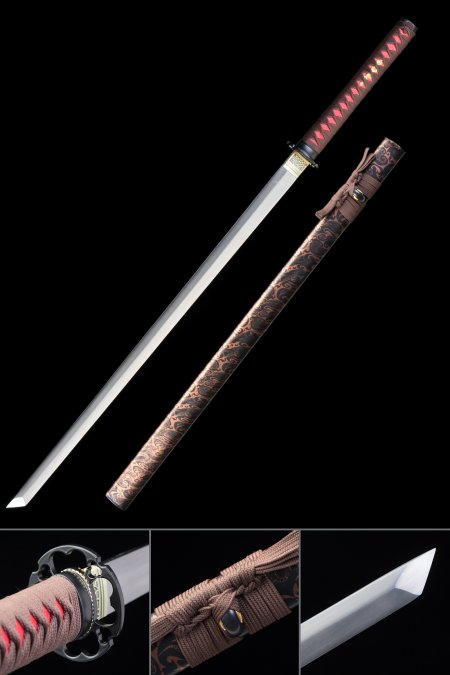
Chokuto Sword 1060 Carbon Steel - Brown-Red Cord Handle, Dragon Patterned Brown Saya |