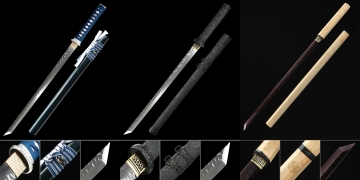
What makes a hamidashi different from a standard tanto?
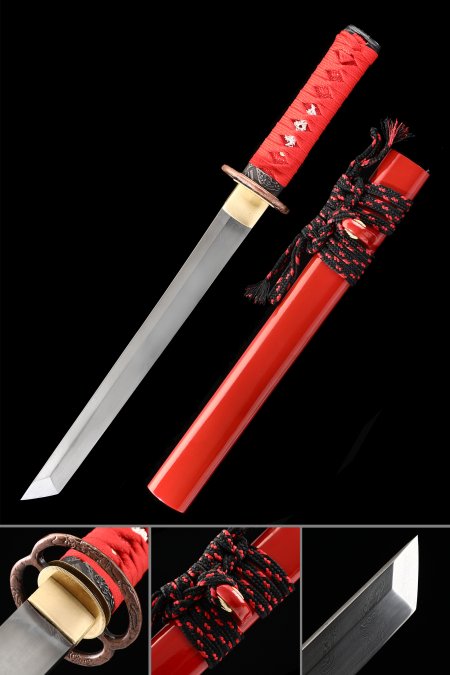
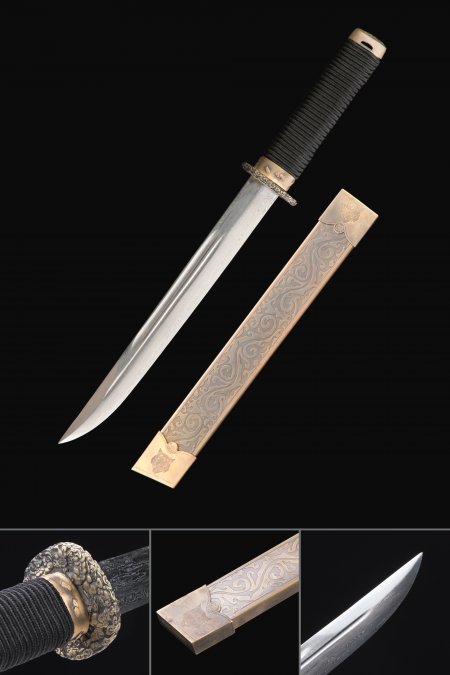
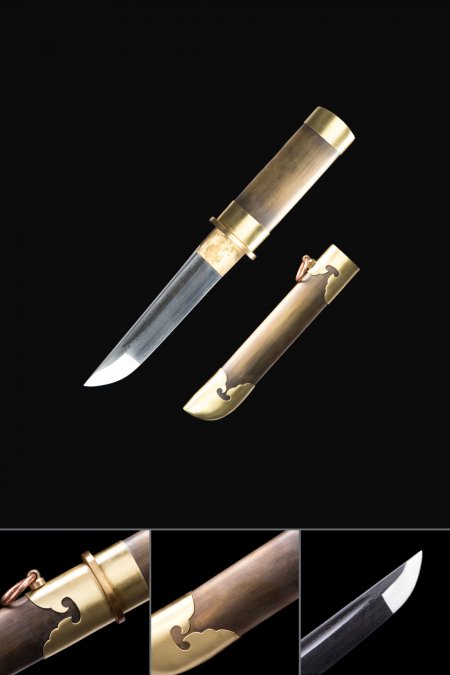
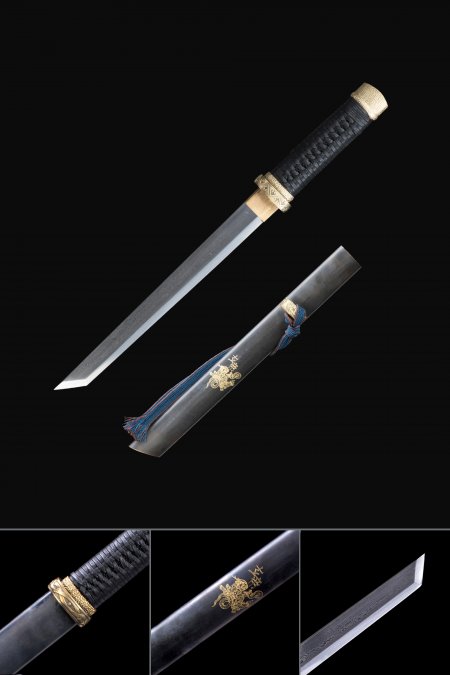
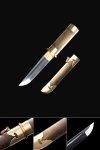
The defining difference lies in the guard. A standard tanto typically features either no tsuba at all - the aikuchi style - or a full-sized circular or shaped guard. A hamidashi uses a ko-tsuba, a miniaturized guard that barely extends beyond the profile of the handle itself. This subtle flare gives the hamidashi a more understated, elegant appearance while still providing the visual separation between blade and grip that defines a guarded short blade. In collectible terms, the hamidashi is prized for this restrained formality - it reads as refined rather than martial, making it particularly well suited for display in curated interiors or alongside traditional Japanese decorative objects.
How is the pattern on a Damascus steel blade actually formed?
The pattern visible on a Damascus steel blade is a direct result of forge-folding - a process where two or more steel alloys with differing carbon content are stacked, heated, hammered flat, folded, and repeated many times over. Each fold doubles the number of layers in the billet. After forging and grinding, the blade is acid-etched, a finishing step that chemically reacts differently with the high- and low-carbon layers, causing them to appear as alternating light and dark bands. The specific pattern - whether flowing and wood-grain-like or tighter and more turbulent - depends on how the smith manipulated the billet during forging. No two Damascus blades produce an identical surface, which is a key part of their collectible value.
Do copper and brass fittings age differently on display pieces?
Yes, and understanding this distinction matters for long-term collectors. Copper develops a patina over time - shifting from its initial bright reddish-orange toward deeper amber and eventually a muted brown or greenish-gray if exposed to moisture. Many collectors value this natural aging as it gives the piece an authentic, lived-in character. Brass, being an alloy of copper and zinc, ages more slowly and maintains its golden luster longer under typical indoor display conditions. If you prefer consistent appearance, occasional polishing with a non-abrasive cloth keeps brass fittings bright. If you prefer to let the piece evolve naturally, copper fittings will reward patience with a distinctly antique character that integrates beautifully with an etched Damascus blade.
Is a full-tang construction important for a display collectible?
For display purposes, full-tang construction is a meaningful quality indicator even though the piece will not see functional use. A full tang - where the steel of the blade extends as a continuous piece through the entire length of the handle - ensures that the handle fittings, including the tsuba, fuchi, and kashira, are seated with structural integrity. Handles on rat-tail or partial-tang construction can loosen over years of seasonal humidity changes, causing fittings to shift or rattle. A full-tang hamidashi maintains its tight, precise assembly over decades, which preserves both its display presentation and its long-term appraisal value. It is a construction standard that serious collectors treat as a baseline expectation.
What display and storage setup works best for a Damascus hamidashi?
A horizontal katana or tanto stand is the most common and visually appropriate display solution, allowing both the saya and handle to rest in balance. Position the piece away from windows, as UV exposure fades lacquered sayas and can dull the acid-etched surface of the blade over time. Humidity is the primary enemy of Damascus steel - aim for a stable indoor environment between 40% and 55% relative humidity. When storing rather than displaying, keep the blade in its saya and wrap the piece loosely in a soft cloth. Apply a thin coat of choji oil or neutral mineral oil to the blade before extended storage. Avoid plastic wrapping, which can trap moisture against the steel surface.