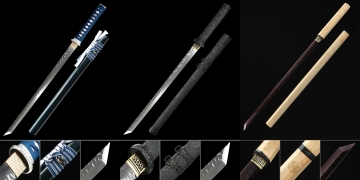
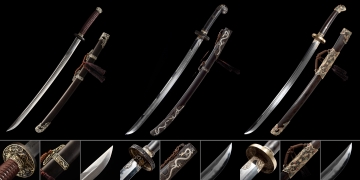
What makes Damascus steel visually distinct on a katana blade?
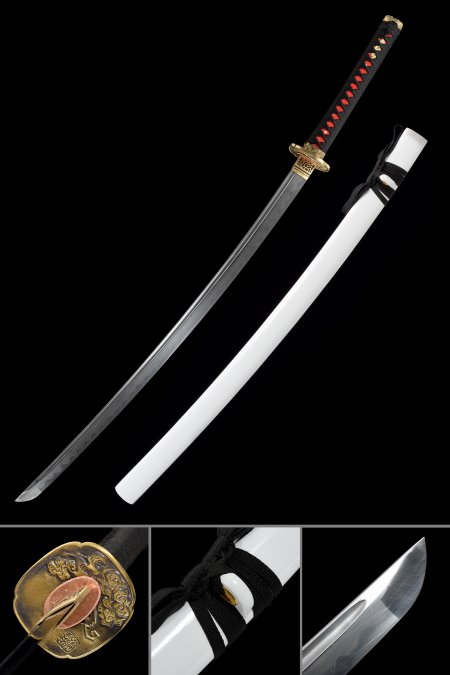
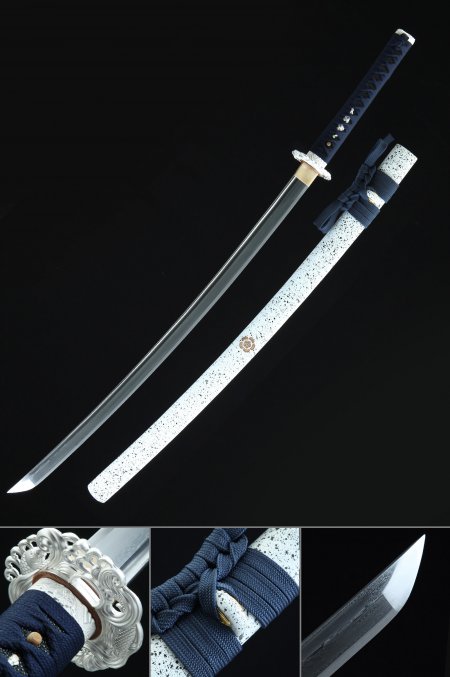
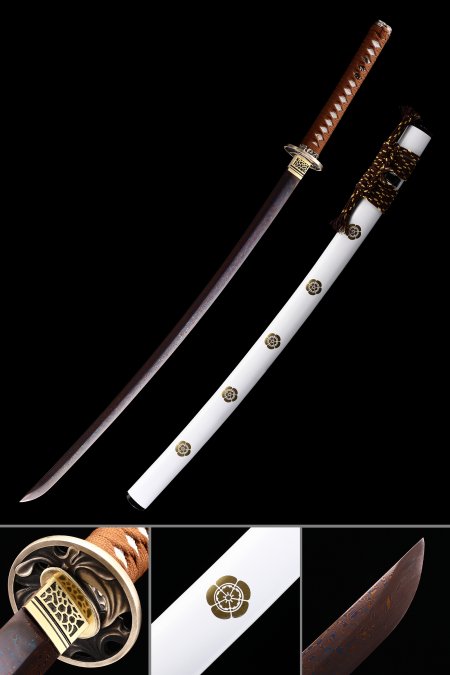
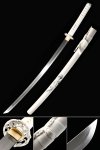
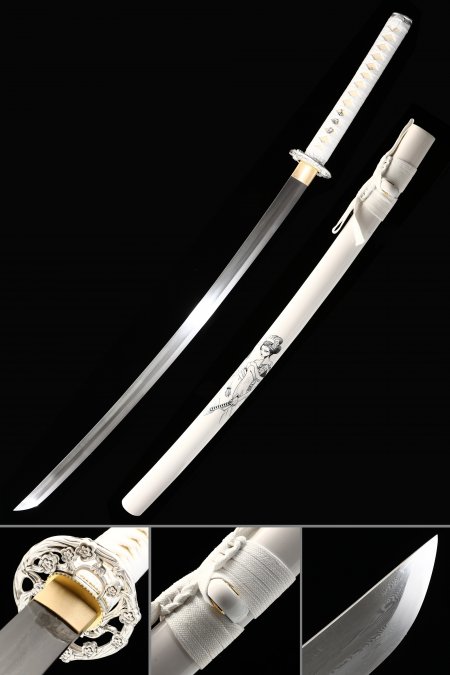
Damascus steel is produced by forge-welding multiple layers of high-carbon steel and iron, then repeatedly folding and drawing out the billet. This process creates flowing, wave-like grain patterns across the blade surface — often described as woodgrain, water ripple, or ladder patterns depending on the manipulation technique used. Because no two billets fold identically, the surface pattern on each finished katana blade is genuinely unique. When etched with acid during finishing, the contrasting carbon content in each layer reacts at different rates, making the layering structure clearly visible. On a White Damascus Steel Katana, this organic patterning reads especially well against the clean white saya, creating a strong visual contrast that draws the eye directly to the blade's surface character.
How does a white saya affect how a katana is displayed?
The saya — the scabbard housing the blade — is a major visual element of any katana display, often occupying as much visual space as the blade itself when the sword is mounted horizontally. A white lacquered saya introduces high contrast and a sense of brightness that darker finishes cannot achieve. In traditional Japanese interior display, white represents purity and formality, making white saya katana appropriate for prominent placement in a tokonoma alcove or on a dedicated sword stand. In contemporary collector spaces, the white finish reads as clean and modern, complementing minimalist shelving and glass display cases equally well. The finish also highlights the color and quality of the ito cord wrapping and tsuba metal, making the full fitting package more readable at a glance.
Are these katana suitable as gifts for sword collectors?
White Damascus Steel Katana pieces make particularly strong collector gifts because they offer immediate aesthetic impact alongside genuine material quality. The Damascus patterning gives the recipient something specific and interesting to study, and the white saya presentation photographs well — an important factor for collectors who document and share their acquisitions. When selecting a piece as a gift, consider the recipient's existing display aesthetic: a manga-themed saya with floral tsuba suits a collector with a broader pop-culture interest, while a classically appointed piece with gold tsuba fits someone focused on traditional presentation. Each katana arrives as a complete set with saya and full fittings, so no additional purchases are needed to display it properly.
How should I oil and maintain a Damascus katana in storage?
Damascus blades require light but consistent maintenance to preserve the etched surface pattern. Apply a thin coat of choji oil — a traditional mineral oil blend used for Japanese sword care — every two to three months using a soft, lint-free cloth. Work from the base of the blade toward the tip in smooth, even strokes, and avoid pooling oil near the habaki collar where it can seep into the saya and soften the lacquer over time. Store the katana horizontally on a padded rack in a low-humidity environment, ideally between 40–55% relative humidity. Avoid placing display pieces near exterior walls, heating vents, or windows where temperature swings are frequent. If surface oxidation appears on the Damascus pattern, consult a professional sword polisher rather than attempting abrasive removal, which can permanently damage the layered surface.
How do White Damascus katana compare to standard carbon steel katana?
Standard high-carbon steel katana — typically made from 1045, 1060, or 1095 steel — have a uniform, homogenous grain structure that produces a consistent, clean blade finish. The surface appearance is largely determined by polish level and hamon (temper line) visibility. Damascus katana, by contrast, derive their surface character from the layered material itself rather than polish or heat treatment alone. This means the visual complexity is built into the steel, not applied afterward. For display purposes, Damascus pieces tend to have stronger visual presence at medium distances, where the patterning is easily readable. For collectors primarily interested in hamon aesthetics and classical polish, high-carbon monosteel katana may be preferable. Both are legitimate collectible categories, and many serious collectors maintain examples of each.